Photo Stories
帰る姿勢
The Posture of Going Home
Japanese
スーツの男は、三本目の電車を見送った。
ホームの売店で買った揚げ物は、もうほとんど冷めていた。それでも一口ずつ、時間を測るように食べた。ひとつ噛むたびに、電光掲示板の時刻が少しだけ進む。
会社から自宅までは四十二分。いつもの快速に乗れば、妻が味噌汁を温め直す午後八時十二分に玄関を開けることができる。
だが、今日は会社には行っていない。
三か月前、早期退職の書類に判を押した。六十一歳だった。妻にはまだ話していない。朝七時二十分に家を出て、図書館や喫茶店を転々とし、夕方になると駅へ戻る。鞄には新聞と折り畳み傘、それから会社から送られてきた離職票が入っている。妻が持たせてくれた弁当は、毎日公園のごみ箱に中身を捨て、空の容器だけを持ち帰った。
彼の背後には、もう一列のベンチがあった。
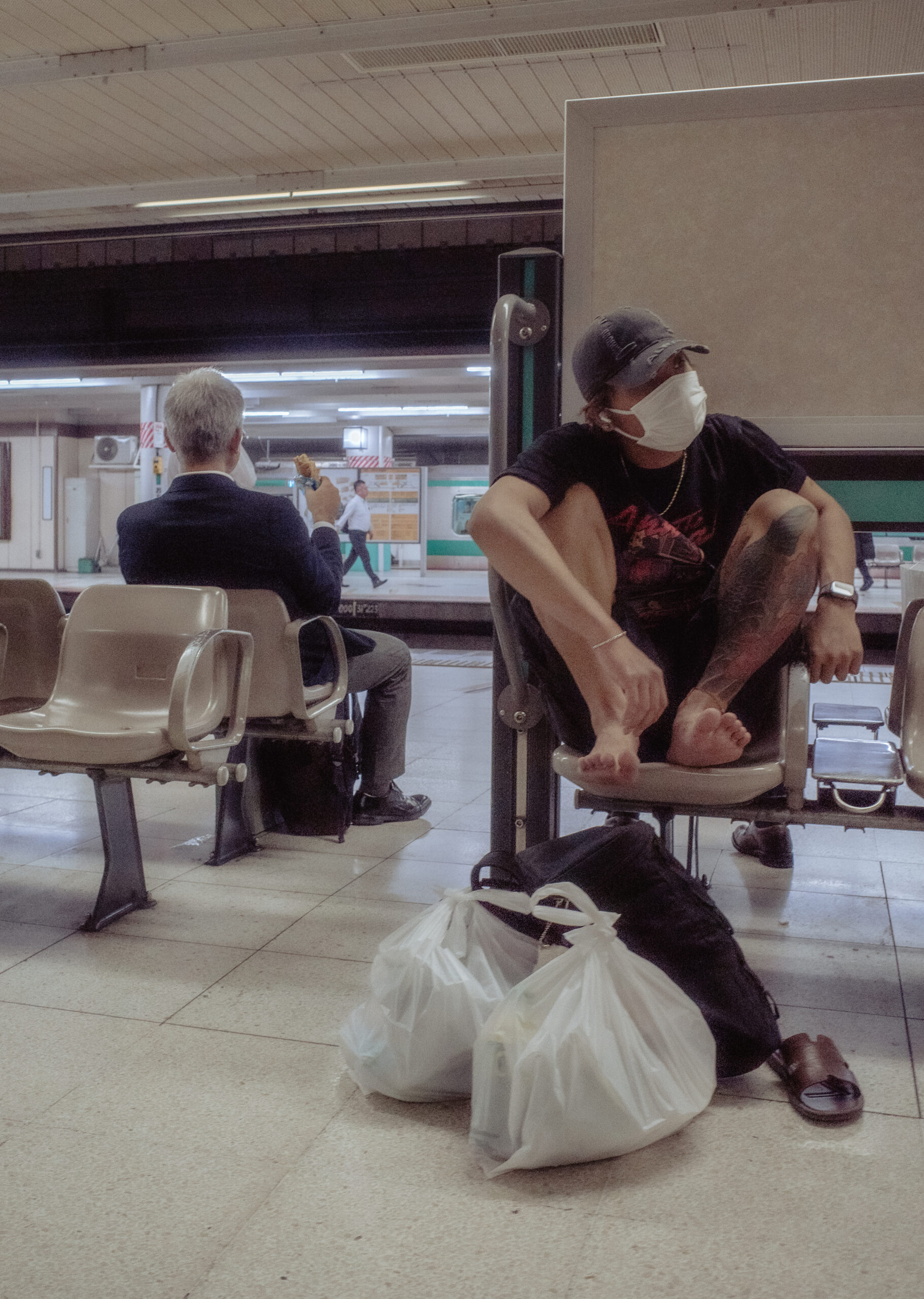
ホーム中央の仕切りを挟み、二列の座席は互いに反対を向いている。そこに、裸足の男が膝を抱えて座っていた。
二人は背中合わせだった。顔は見えない。ただスーツの男には、ときおり仕切りの脇から突き出す刺青の入った脚と、床に置かれた二つの白い袋が見えた。
行儀が悪い、と彼は思った。黒い帽子にマスク、椅子の上に両足を乗せている。働いているのかどうかも分からない。帰る時間も、待っている家族もないのかもしれない。
裸足の男は、今年三十四になる。
昼過ぎまで内装解体の現場にいた。新しい安全靴の踵が剝け、靴下まで血が染みたので、駅のトイレで脱いだ。サンダルは履くだけでも痛かった。
白い袋のひとつには、スーパーで買った豆腐、卵、鯖の水煮、柔らかいうどんが入っている。もうひとつには、介護用のおむつと使い捨ての手袋が入っていた。
父親が倒れてから、週に三日、実家へ通っている。
父は息子の刺青を見るたび、「そんなものを入れた人間に世話をされたくない」と言う。そのくせ一人では風呂に入れず、夜中にトイレへ行くときは、廊下の壁を拳で叩いて息子を呼ぶ。
男はその音が嫌いだった。
助けを求める音なのに、責められているように聞こえた。
彼の背中側では、スーツの男が揚げ物を食べている。きちんと整えられた白髪と、磨かれた革靴だけが、仕切りの向こうに時折見えた。
きっと真面目に働き、毎月決まった金を家に入れ、妻の待つ家へ帰るのだろう。自分とは違う。ああいう人間は、人生のどこで何を選べばよいのか、最初から教えられているように見えた。
スーツの男の携帯電話が震えた。
妻からだった。
「今日は少し遅いの?」
彼は揚げ物を持ったまま、しばらく画面を見た。
「電車が遅れている」
そう打って送った。電車は一分も遅れていなかった。
ほとんど同時に、裸足の男の携帯も震えた。
父からだった。
着信を切ると、すぐにもう一度鳴った。男は出なかった。三度目でようやく通話ボタンを押した。
「今、電車だから」
まだ乗っていなかった。
電車がホームへ入ってきた。
裸足の男は二つの袋を持ち、傷口に触れないようサンダルへ足を滑り込ませた。立ち上がるまでに少し時間がかかった。
仕切りの端を回り、乗車口へ向かう。そのとき初めて、スーツの男の正面を横切った。
男は思っていたより老けていた。揚げ物を持った手を膝に置き、乗るべき電車ではないものを見るように、開いた扉を眺めていた。
スーツの男も鞄を持って立ち上がった。だが扉の前まで行くと、後ろから来た人に道を譲り、そのままホームに残った。
閉まる直前、裸足の男が車内から彼を見た。
目が合った。
スーツの男は、若い男には帰りを待つ人間などいないと思った。
裸足の男は、スーツの男には帰ることをためらう理由などないと思った。
電車が走り出す。
一人は、向き合うことが苦しい相手のもとへ向かった。
もう一人は、会いたいと思う相手のもとへ帰れなかった。
English
The man in the suit let a third train go by.
The fried snack he had bought at the platform kiosk was almost cold. Still, he ate it one bite at a time, as if measuring the passing minutes. With each bite, the time on the departure board moved forward a little.
It took forty-two minutes to get from his office to his home. If he caught his usual rapid train, he could open the front door at 8:12 p.m., just as his wife was reheating the miso soup.
But today, he had not gone to the office.
Three months earlier, at the age of sixty-one, he had stamped the papers accepting early retirement. He had not told his wife. Every morning he left home at 7:20, moved between libraries and coffee shops, and returned to the station toward evening. His bag held a newspaper, a folding umbrella, and the separation notice the company had sent him. Each day, he emptied the lunch his wife had packed into a trash can in the park and took home only the empty container.
Behind him was another row of benches.
A partition ran down the center of the platform, with the two rows of seats facing in opposite directions. On the other side, a barefoot man sat with his knees drawn up.
The two men sat back to back. They could not see each other's faces. From time to time, the man in the suit could see a tattooed leg extending past the side of the partition and two white bags resting on the floor.
Bad manners, he thought. The man wore a black cap and a mask and had both feet up on the seat. There was no telling whether he even had a job. Perhaps he had no set time to go home, no family waiting for him.
The barefoot man would turn thirty-four that year.
He had been at an interior-demolition site until early afternoon. His new safety boots had rubbed his heels raw, staining even his socks with blood, so he had taken them off in the station restroom. Even slipping on his sandals hurt.
One of the white bags contained tofu, eggs, canned mackerel, and soft udon from the supermarket. The other held adult diapers and disposable gloves.
Since his father collapsed, he had been going to his parents' house three days a week.
Whenever his father saw his son's tattoos, he said, “I don't want to be cared for by someone who has put things like that on his body.” Yet he could not bathe alone, and when he needed the toilet in the middle of the night, he pounded the hallway wall with his fist to summon his son.
The man hated that sound.
It was a plea for help, yet it sounded like an accusation.
On the other side of his back, the man in the suit was eating something fried. From time to time, all he could see beyond the partition was neatly groomed white hair and polished leather shoes.
He probably worked diligently, brought home the same amount of money every month, and returned to a house where his wife was waiting. He was different. Men like that seemed to have been taught from the beginning what to choose and where to choose it at every turn in life.
The man in the suit's phone vibrated.
It was his wife.
“Are you going to be a little late today?”
Still holding the fried snack, he stared at the screen for a while.
“The train is delayed.”
He typed the words and sent them. The train was not even a minute late.
Almost at the same moment, the barefoot man's phone vibrated too.
It was his father.
He declined the call, and it rang again at once. He did not answer. Only on the third call did he finally press the button.
“I'm on the train.”
He had not boarded yet.
A train pulled into the platform.
The barefoot man picked up the two bags and eased his feet into his sandals, careful not to touch the raw skin. It took him a moment to stand.
He rounded the end of the partition and headed for the boarding doors. For the first time, he passed directly in front of the man in the suit.
The older man looked older than he had imagined. He rested the hand holding the fried snack on his knee and stared at the open doors as if they belonged to a train he was not meant to take.
The man in the suit picked up his bag and stood as well. But when he reached the doors, he stepped aside for someone coming from behind and remained on the platform.
Just before the doors closed, the barefoot man looked at him from inside the carriage.
Their eyes met.
The man in the suit thought there could be no one waiting for the younger man to come home.
The barefoot man thought the man in the suit could have no reason to hesitate about going home.
The train began to move.
One of them was heading toward someone he found painful to face.
The other could not return to the person he longed to see.