Photo Stories
黒ホッピー
Kuro Hoppy
Japanese
待ち合わせではなかった。少なくとも、相手はそう思っていない。
佐伯修一、五十四歳。業務用冷蔵庫の修理会社で二十八年働いている。コンビニのバックヤード、スーパーの精肉売場、町中華の厨房。人が物を冷やしておきたい場所には、だいたい彼の仕事がある。今日も午後から北千住の居酒屋で製氷機を直し、夕方に錦糸町の惣菜屋でショーケースの異音を見た。作業着の胸ポケットには、油で角の丸まった伝票が三枚入っている。
家には妻がいる。”いる”という言い方が正しい。会話はある。”米がない”、”電球が切れた”、”町内会費を払ったか”。その程度の会話なら、まだ夫婦として成立している。二十六歳の長男は川崎で派遣の仕事をしていて、盆と正月にだけ帰ってくる。二十二歳の娘、栞は三年前から家に寄りつかない。理由は、佐伯にも分かっていた。分かっていることほど、人は口に出せない。
彼はこの店に月に一度だけ来る。黒ホッピーを頼み、中を二回足し、焼きとんはカシラとシロを一本ずつ。誰かと飲むわけではない。ただ、入口の見える席に座る。誰かが入ってくるたびに、目を上げる。違うと分かると、伝票の裏にボールペンで冷蔵機の型番を書いたり二重線を引いて消したりする。
娘が二十歳になったとき、彼は一度だけメッセージを送った。
「酒が飲める年になったら、どこかで一杯やろう」
既読はつかなかった。それでも彼は、二年と少し、月に一度この店に来ている。待っているのではない。待つ資格がないことくらい知っている。ただ、もし偶然というものがあるなら、偶然見つけてもらうためには、どこかに座っていなければならない。
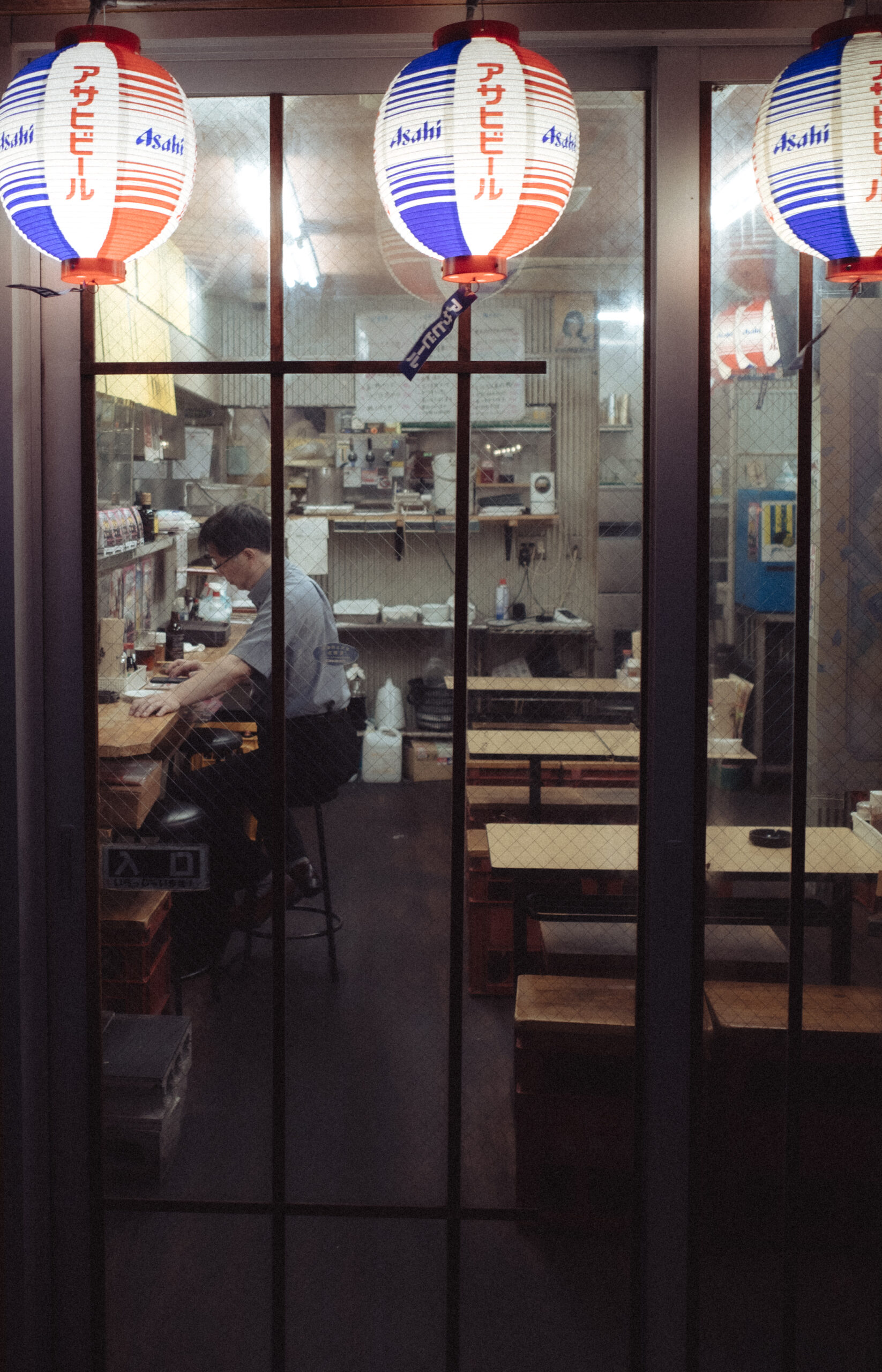
提灯の光がガラスに滲み、店の中を少しだけ祭りのように見せていた。佐伯は黒ホッピーを半分だけ残し、スマートフォンを裏返しに置いた。何も来ていないことを確認するのも、何か来ていることに気づかないふりをするのも、どちらも同じくらい面倒だった。
奥の席の若い男たちが笑った。奥のテレビでは野球中継が流れている。焼き台の煙が換気扇に吸い込まれ、誰かの注文したレバ刺し風の皿が運ばれていく。
佐伯はふと、自分が本当に待っているのは娘ではないのかもしれないと思った。娘が来ないことを確認するために、ここに来ているのかもしれない。今日も来なかった。だからまだ、自分は罰を受け続けている。そう思えば、明日も仕事に行ける。
彼は残った黒ホッピーを飲み干し、誰にも聞こえない声で「悪かったな」と言った。
その言葉は、暖簾にも、提灯にも、娘にも届かず、ただグラスの底に少しだけ残った。
English
There was no arrangement to meet. At least, not as far as the other person knew.
Shuichi Saeki, fifty-four. He has worked for a commercial refrigeration repair company for twenty-eight years. The back rooms of convenience stores, the meat counters of supermarkets, the kitchens of neighborhood Chinese restaurants. Wherever people need things kept cold, there is usually work for him. That afternoon, he repaired an ice machine at an izakaya in Kita-Senju; in the evening, he checked a display case making a strange noise at a prepared-food shop in Kinshicho. In the breast pocket of his work jacket are three service slips, their corners softened and rounded by grease.
His wife is at home. Is is the right word. They still talk. “We’re out of rice.” “The lightbulb’s burned out.” “Did you pay the neighborhood association dues?” Conversations of that sort are enough to keep them functioning as husband and wife. Their twenty-six-year-old son works a temp job in Kawasaki and comes home only at Obon and New Year. Their daughter, Shiori, is twenty-two and has stayed away from the house for three years. Saeki knew why. The things one understands are often the hardest to say aloud.
He comes to this place once a month, and only once. He orders a Kuro Hoppy, two shochu refills, and one skewer each of pork cheek and intestine. He is not drinking with anyone. He simply sits where he can see the entrance. Each time someone comes in, he looks up. When he sees it is someone else, he writes model numbers for refrigeration units on the backs of his service slips in ballpoint, then draws double lines through them.
When his daughter turned twenty, he sent her a message just once.
“Now that you’re old enough to drink, let’s have one somewhere.”
The message never showed as read. Even so, for a little over two years, he has come here once a month. He is not waiting. He knows he has no right to wait. But if there is such a thing as chance, then he has to be sitting somewhere for chance to find him.
The lantern light bled into the window glass, making the bar look, just slightly, like a festival. Saeki left his Kuro Hoppy half-finished and placed his smartphone facedown. Confirming that nothing had arrived, or pretending not to notice that something had—either seemed equally difficult.
The young men seated farther inside laughed. A baseball game played on the television at the back. Smoke from the grill was drawn into the exhaust fan, and a plate of liver prepared sashimi-style was carried past for someone.
It occurred to Saeki that perhaps his daughter was not really the one he was waiting for. Perhaps he came here to confirm that she would not come. She had not come today either. So his punishment was still continuing. If he thought of it that way, he could go to work again tomorrow.
He drained the rest of his Kuro Hoppy and said, too quietly for anyone to hear, “I’m sorry.”
The words reached neither the noren nor the lanterns nor his daughter. They lingered only faintly at the bottom of the glass.